Mayaguana

April 1st, 2007

Mayaguana, the east most island of Bahamas, about 60 miles north of the islands of Inagua, is a place of lonely beaches and bone-fishing. The island of Mayaguana was a desolate uninhabited place till the early 1800. The settlers came from the nearby Turks island and established the three settlements at Abraham’s Bay, Betsy Bay and the Pirate’s Well. The little more than 400 locals make their living by fishing. The bone-fishing enthusiasts have given them another vocation, fishing guides.


Things to Do


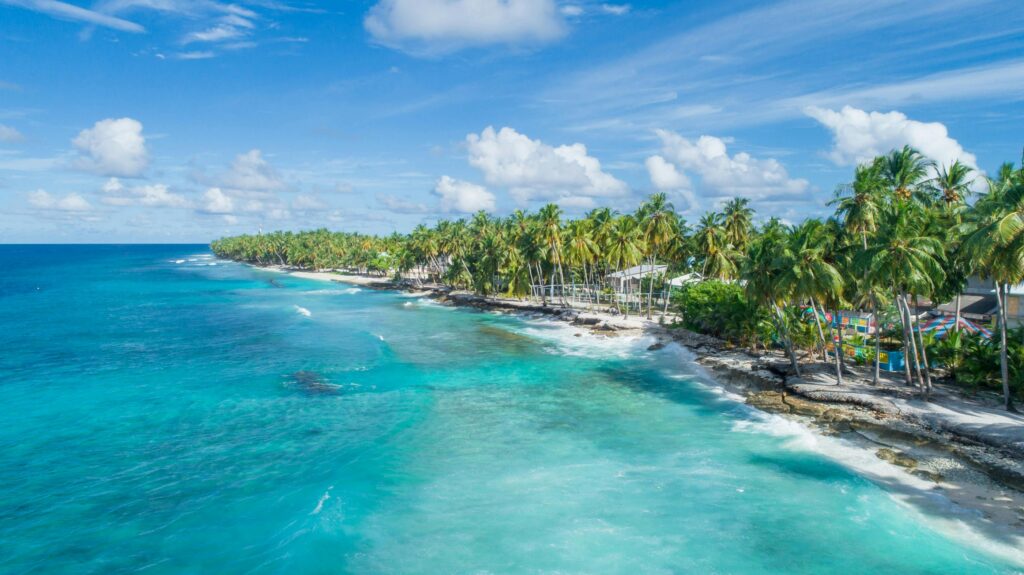
Mayaguana has marvelously clean beaches and an even climate with 360 days of sun in a year. The opportunities exist for an excellent family vacation with scuba diving, swimming and sunbathing on the lonely beaches. There is a fair amount of eco-tourism with flamingos, variety of other birds and the Bahama hutia, a quaint cross between a rabbit and a rat. The eastern part of the island is wild and untamed; the right recipe for the extreme hikers who delight in challenges.

Accommodations

The Baycaner Beach Resort with well furnished 16 rooms is located in Pirate’s Well. The resort offers all that a traveler to a beach location would look for. The feeding grounds of the Flamingo and bone-fishing sites are just a walking distance away from the resort. The freshly caught and delectably cooked seafood would beat a sushi.

How to Reach

The lone airstrip of Mayaguana close to Abraham’s Bay was part of US missile station is serviced by three flights a week by the BahamasAir. Few private flights are also available from Nassau. The Bahamas Government with Mayaguana Island Development Company is developing an all facility resort with airport, marina and other facilities. It sure is an opportunity to own a condo in Mayaguana, for an all exclusive holiday experience or a home away from home.

Inagua

March 31st, 2007

Salt, iguana and pink flamingos; that is Inagua for you. A place for birders, adventure travelers, who are not daunted by the prospect of sweating it out in a dry land. The name Inagua has been derived from the original name of Henagua, however the more popular origin is the anagram of “iguana”. Inagua comprises of Great Inagua and Little Inagua, located in the south most part of the Bahamas archipelago.

Great Inagua

Great Inagua is the perfect destination for ecotourism. Half of the island is the Inagua National Park and home to tens of thousands of pink flamingos and other birds like the Bahama parrots, herons, pintail ducks, and pelicans. The other interesting place, though not specifically tourist interest, is the Morton Salt Company producing thousands of tons of sea salt. The interesting phenomenon is the eco-friendly salt making process where the flamingos feed on the brine shrimp in the salt lagoons of Morton Salt Company. 

The only inhabited place in Inagua is Mathew Town with a population of about a thousand people. There are a few small hotels, lodges and inns with five to ten rooms, no glitzy hotels or beach resorts.

Little Inagua

It is a small island of about 30 square miles and five miles north of Great Inagua. The whole of the island is just a wildlife reserve inhabited by goats, wild donkeys, variety of birds and is also the nesting place for endangered sea turtles.

How to Reach

BahamasAir flies thrice a week to the only airport in Mathew Town. The Morton Salt Company run Main House is a suitable place to for a comfortable stay. There are no established taxi services; however locals are helpful and willing to lend a helping hand for a price

San Salvador

March 30th, 2007

The great voyage of Columbus has left indelible footprints all over the Caribbean but San Salvador has not one but four separate monuments celebrating his initial landing in 1942. The name San Salvador has been given by Columbus himself and pronounced the island as the most beautiful. Later the legendary pirate George Watling made San Salvador his headquarters and the name Watling Island could only be erased in 1925, however Watling Castle though in ruin is still an attraction of San Salvador.

Things to do 

San Salvador is a small 12 mile by five mile island but has a whole gamut of opportunities for travelers; relaxing on miles of secluded white sand beaches; snorkeling in the crystal clear waters; plethora of diving sites in the wrecks and reefs for scuba diving enthusiasts; and plenty of game fishing on the circling flats. The old plantation ruins, monuments, mysterious Lucayan Indian settlements and tens of land locked lakes invite more than a cursory look.

Places of Interest

The primary settlement of San Salvador is Cockburn Town with a population little less than 500. The enormous white washed structure, previously a Catholic Church is its known landmark. The Dixon Hill Lighthouse built in 1887 with its 160 feet height would give you a bird’s eye view of the island. The Farquharson Plantation ruins and Pigeon Creek Indian Site are famous all over Bahamas.  The New World Museum at Palmetto Grove with Lucayan pottery and original Arawak Indian artifacts, the Bahamian Field Station, Olympic Monument and Heloise Monument are some of the 20th century additions.

So just land at San Salvador Airport in Cockburn Town and begin the marvelous journey of relaxation and bliss.

Eleuthera & Harbour Island

March 29th, 2007

The history of Eleuthera began more than three centuries ago with English Adventurers establishing the first seat of democracy of the Western World on the island then called Ciguateo. The name Eleuthera, coined by the settlers, signifies freedom and the adventurers were seeking religious freedom from the persecution in England and Bermuda. The 70 freedom seekers headed by Captain William Sayle landed near the Governor’s Harbour. The tale of disputes and strife is signified in the cave now known as the Preacher’s Cave and marked the birth of Bahamas.

Geography of Eleuthera and Harbour Island

Located 60 miles from Nassau and around 200 miles from Florida at its northern tip, the 100 mile long Eleuthera is a sickle shaped island with pink and white sand beaches. The charm of pineapple plantations and colonial villages is the hallmark of this well developed strip of land. The Harbour Island is a small portion of the land mass and the most beautiful and scenic location in Bahamas. It is also known as Briland and once was the capital of Bahamas and still is the largest city after Nassau. The island enjoys the status of being the best island in the Caribbean as of 2005 with a stamp of authority from Travel & Leisure magazine.

Things to do

The islands have a well developed tourist infrastructure and provide all the adventure activities available in most of the Bahamian locations. Apart from that, the oldest settlements in Dunmore Town and Spanish Wells have been making their living from crawfish catches in the sea. The land is bursting with antiquity and folk lore; old buildings, churches and settlements are a traveler’s photo shoot paradise.

How to Reach

The Island is highly developed and has three government airports and one private airstrip. The North Eleuthera Airport is just a couple of miles away from the Harbour Island. The Rock Sound International Airport is located in the South Eleuthera and another at Governor’s Harbour, somewhat mid of the island.

Cat Island

March 27th, 2007

The shoe-shape Cat Island about 300 miles from Miami, USA is an untamed most fertile and beautiful landmass of Bahamas. The place was home to prosperous cotton farmers during the 18th century. The name of the island has presumably coined after famous English Captain Arthur Catt. It is one of the most tranquil places in Bahamas, a perfect getaway for those seeking solitude and escape from the travails of modern lifestyle.

The People

Cat Islanders are famous for the Bahamian folklore, the native lilting music, dexterous hands and ingenuity in living off the land. The local industry utilizes all the natural raw material for weaving hats and bags. Many small vocational courses are oriented towards teaching basic skills to visitors. The rich history lives in many beautiful cathedrals, churches and dilapidated homes of 19th century colonial rulers.

Things to Do

This is the ultimate holiday destination if you just do not want to do anything whatsoever. The place is still unexplored and not a crowded tourist destination; the miles of green hills and vacant beaches are all for the few who love solitude. You also have state-of-the-art adventure activities. This includes miles of nature trails, snorkeling, diving and game-fishing. The highest point of Bahamas Mount Alvernia, 206 feet above sea level is located here. And to top it all, it has one of the finest climates in Bahamas, maintaining within 80s during summer and not dropping below 60 during a fleeting winter.

How to Reach

The Cat Island has two government airports, the Arthur’s Town Airport and the New Bight Airport. It also has private airstrips at Cutlass Bay and Hawk’s Nest. You can get direct flights from many US and European destinations. So pack just the bare essentials for a life off the land in Cat Island.

Long Island

March 26th, 2007

Long Island, around 350 miles from the Miami coast, this 80 mile long and four mile wide Island is the most picturesque place in Bahamas. The island thrives on contrast, the white sand beaches and towering cliffs, the tropical landscape south of the Tropic of Cancer and the rolling hills in the north. The beach at Cape Santa Maria is one of the top ten in the world.

History

The Loyalists from US state of Carolina settled here in 1790s with their slaves and started large plantations. The cotton from these plantations was a big business till the abolition of slavery. The ruined mansions of the era can still be seen in many places. The locals still engage in agricultural pursuits and grow variety of crops. The Long Island is best known for its fresh sea food especially the lobster and at highly reasonable prices.

Attractions

Columbus Point, which overlooks the protected Columbus Harbor, has a monument and a plaque marking his landing in the 1490s. Stella Maris, the Star of the Sea, is the spot for scuba divers and game-fishermen. Clarence Town is a well laid out harbor town with its twin churches, St. Paul’s Anglican Church and a Catholic Church of St. Peter. The planet’s deepest blue hole at Dean’s Blue Hole plunges 600 feet inches after the shore. The Lucayan caves with their craft and artifacts, is a wonder of nature. The Long Island has plenty of marvelous beaches for an emotional experience.

How to Reach

Long Island has two airports, Stella Maris Airport in the North and Deadman’s Cay Airport in the South of the island. Just plan your trip to land in the hills of north and leave after the tropical sun bathing in the south.

Bimini

March 25th, 2007

Bimini, the closest part of Bahamas to the United States, actually it is just fifty miles from the coast of Florida. The Bimini Islands are the tiniest group of Bahaminian islands, measuring just 7 miles long and half a mile wide. Bimini consists of three separate islands, the North Bimini, the South and the East Bimini. The major population center Alice town is located in the North Bimini. The other inhabited places are Bailey Town, Porgy Bay and to some extent Paradise Point; all being places of tourist attraction with minimal resident population.

History

Bimini began its shady existence with ship wreckers who plundered ships that bellied on the reefs. The prohibition era in the United States gave it the rum runners. The historians however believe that Bimini is the lost continent of Atlantis and the theory is corroborated by the mysterious stone formations. Whatever and whenever be the origin but these small islands are haven for game-fishing and extreme water sports enthusiasts.

Things to do

You can begin your exploration with the Alice Town, the commercial hub of Bimini. The single quiet road, the King’s Highway, has an assortment of shops selling home essentials, a dozen odd bars and similar number of restaurants. This laid back settlement takes on a wild hue during the angling tournaments and rightly so as the catches are one of the largest in the world. One can go to a few attractions like the Fountain of Youth, the Fresh Water wells and the Shark Mounds of east Bimini. The Shark Mounds have generated a lot of curiosity among historians as to who created such marvelous mounds in the middle of mangrove swamps. Then game fishing, snorkeling and scuba diving, well these are the main activities in Bimini.

How to Reach 

Surprisingly this small remote corner of Bahamas has two Government run and one private airstrip. Flights from Florida and Nassau are available at regular interval. You can also use your own or hired power boat from Florida coast to reach here in about two to three hours.

Berry Islands

March 24th, 2007

A cluster of 30 small islands and roughly 100 cays, located 35 miles northwest of Nassau are the magical Berry Islands. The total land area is not more than twelve square miles but it is the second home of the rich and famous who own many islands here. There are at least four privately owned airstrips in the Berry Islands. It is said that Berry Islands has the most number of millionaires per square mile than any other place on the planet.

Things to do

The mostly uninhabited Berry Islands’ primary attractions are the privacy and seclusion. The magical harbors, swim-ashore beaches offer fantastic swimming, snorkeling and diving opportunities. The angling community would vouch for the record catches of bonefish, mackerel, sailfish and white and blue marlins.

Attractions in Berry Islands

Chub Cay, the angler’s paradise; Great Harbor Cay, a windy place with pretty hills; Great Stirrup Cay, a historical site with an 1863 lighthouse; Mamma Rhoda Rock, divers’ paradise of shallow coral reef; and Hoffman Cay inhabited by oysters are some of the sites for the nature lovers. The Sugar Beach Caves with sandy coves amongst cliffs is Caribbean answer to the great beaches of Mediterranean and the Queen’s Beach is a pine shaded lovers’ beach.

How to Reach

The ferry and mail-boat from Nassau would take four hours and less than fifty bucks to bring you home. Take a Bahamas air from Nassau or hire a private aircraft to touchdown in style and if you happen to know one of the rich and famous why not take a chopper to the private resort.

Andros

March 23rd, 2007

The mangrove country of Bahamas with its own sea-monster, “Loch Ness Monster - Lusca” and mythical elfin inhabitants the Chickcharnie is the largest island of Andros. The island was also known by the Spanish name of La Isla del Espiritu Santo or the Island of Holy Spirit. The world over, Andros is the angling capital with bonefish, a challenging gamefish. The rustic country side with skeletal development and the great natural development off the east coast, one of the longest barrier reefs on the earth are both an open invitation to the adventurous.

The Geography

The island of Andros has three distinct zones; the North Andros, mostly populated and has fairly developed infrastructure; Central Andros, also known by its popular name the Mangrove Cay; and the South Andros, the rustic lightly inhabited and less developed zone. The Central and South are the chill zones for all nature lovers and some say that there are more bird watchers in Andros than the number of birds.

Things to do

There is plenty of action in Andros; the Andros October Sailing Regatta; the pine forest trails and the hunt for the elusive Chickcharnie; the Morgan’s Cave with stalactites and stalagmites; and the great Androsian reef of elkhorn coral, creating a natural gargantuan swimming pool for all the underwater activities. The visitor can buy the exquisite Batik painted, hand dyed local fabric and fashion accessories at the Androsia Factory. The villages of Seminole Indians can be visited in the Red Bays.

How to Reach

The large island of Andros has four airports and regular flights are available from Nassau to any of these. You can also fly directly from Florida to at least three of them where entry to foreign nationals is permitted. The government ferry service from Nassau is another cheap option but with its pitfalls; the three hour ferry ride can take upto eight hours sometimes.

Acklins and Crooked Islands

March 22nd, 2007

The untouched paradise of little islands, located 240 miles southeast of the capital city Nassau were discovered by Columbus during his second landing. The islands of Acklins and Crooked are separate but mentioned as one because of their location in close proximity to each other. The waterway which connects the two islands was the one where Columbus sailed and later pirates thrived. The well-known landmark built in 1876, the Crooked Island Passage Light, can still be seen.

A Rugged Adventure

The boomerang shaped landmass has the smaller Crooked Island in the North and the Acklins in the South. The islands have the pristine beauty and nature persevered for the niche traveler. The remote islands do not have a fully developed tourist infrastructure, sometimes even the ubiquitous gadget, a cell-phone would be a worthless bauble here. So be advised to book and plan your trip in advance.

Attractions

The scent of Cascarilla bark, now used in Campari prompted Columbus to name the Crooked Island as Fragrant Island and you would experience the aroma of herbs when you set foot here. The glory of Crooked Island will unfold itself by a climb on the Colonial Hill. French Wells Bay with mangrove forest, Hope Great House and the Marine Farms Fortress are few names to remember. Acklins Island has similar climate, geography and virgin, unexplored land full of surprises.

How to Reach

You can land at Colonial Hill Airport on Crooked Island or at Spring Point airstrip on Acklins Island from Nassau. You can also board a mail-boat service at Potter’s Cay Dock in Nassau to reach any of the two islands. Be warned to inform your hotel of your ETA well in advance or may be rough it out in an adventurous style.